Physical Chemistry and its applications
.::. Invited Lecture
1
27
Light-Emitting-Diodes (LED): Organic versus Organometallic
Phosphorescent Luminophores
M. S. A. Abdel-Mottaleb
Nano-Photochemistry, Solarchemistry, and Computational Chemistry Labs, Department of Chemistry, Faculty of Science, Ain Shams University, Abbassia, 11566, Cairo, Egypt
ABSTRACT
The photophysical relaxation processes of excited molecules after light absorption,
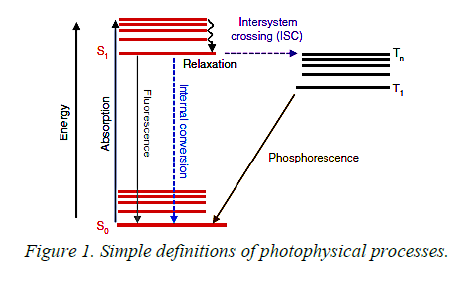
including radiative emission, vibrational relaxation, internal conversion, singlet-triplet intersystem
crossing (ISC) (See Figure 1 for explanation), form the basis of a wide range of advanced
applications, spanning from optoelectronics to photomedicine. Stimuli-responsive phosphors
could be also used as photoprobes in analytical chemistry. These relaxation pathways, particularly
the ISC between singlet and triplet excited states to yield phosphorescence, have increasingly
become the subject of active research and explorations. Through a comprehensive understanding
and manipulation of the phosphorescence mechanism, novel materials with persistent and stable
room-temperature phosphorescence (RTP) could be designed and engineered.
Purely organic RTP materials have attracted lot of attention recently as promising
alternative to expensive and toxic metal based phosphorescent materials.
We are going to present our recent contributions on predicting excited state dynamics of
simple organic luminophores and checking if it can compete or even exceed their inorganic
partners. Furthermore, a glimpse on our efforts to develop and integrate the field among the
Egyptian scientific research and education sectors will be outlined.
Code
BOT
MATH
STA
CSC
CHEM
GEO
BIO
ASM
PHY
10th International Scientific Conf.
Basic Sciences and its Applications
30 March – 1 April, 2020
Cairo, Egypt
المؤتمر العلمي الدولي العاشر
العلوم الأساسية وتطبيقاتها
2020
ابريل
1
-
مارس
30
القاهرة ـ جمهورية مصر العربية
Physical Chemistry and its applications
.::. Invited Lecture
2
27
Effect of the Magnetorheological Nanoparticles Doped with Polydimethylsiloxane for the RNA Detection
Amir R. Ali
Applied-Science & Robotics Laboratory for Applied-Mechatronics (ARAtronics Lab.); Mechatronics Engineering Department, German University in Cairo, New Cairo, 11835, Egypt; and Micro-Sensor Laboratory, Mechanical Engineering Department, Southern Methodist University, Dallas, Texas, 75275, USA
Micro-Sensor Laboratory, Mechanical Engineering Department, Southern Methodist University, Dallas, Texas, 75275, USA cFaculty of Science (Girls), Chemistry Department, Al-Azhar University, Cairo, Egypt dFaculty of Science (Boys), Chemistry Department, Al-Azhar University, Cairo 11675, Egypt; *Corresponding Author: amir.ali@guc.edu.eg or arahmed@smu.edu; Tel.:+20-122-225-7086
ABSTRACT
In this paper, we present a new fabrication method for the whispering gallery mode (WGM) micro-sphere based electric field sensor that allows for longer time periods of sensitivity. Recently, a WGM-based photonic electric field sensor was proposed using a coupled dielectric microsphere-beam. The external electric field imposes an electrostriction force on the dielectric beam, deflecting it. The beam, in turn, compresses the sphere causing a shift in its WGM. As part of the fabrication process, the PDMS micro-beams and the spheres are curried at high-temperature (100oC) and subsequently poled by exposing to the strong external electric field (~8 MV/m) for two hours. The poling process allows for the deposition of surface charges thereby increasing the electrostriction effect. This methodology is called curing-then-poling (CTP). Although the sensors do become sufficiently sensitive to an electric field, they start de-poling after a short period (within ~ 10 minutes) after poling, hence losing sensitivity. In an attempt to mitigate this problem and to lock the polarization for a longer period, we use an alternate methodology whereby the beam is poled and cured simultaneously (curing-while-poling or CWP). The new fabrication method allows for the retention of polarization (and hence, sensitivity to the electric field) longer (~ 1500 minutes). An analysis is carried out along with preliminary experiments. Results show that electric fields as small as ~ 100 V/m can be detected with a 300 mm diameter sphere sensor a day after poling.
Code
BOT
MATH
STA
CSC
CHEM
GEO
BIO
ASM
PHY
10th International Scientific Conf.
Basic Sciences and its Applications
30 March – 1 April, 2020
Cairo, Egypt
المؤتمر العلمي الدولي العاشر
العلوم الأساسية وتطبيقاتها
2020
ابريل
1
-
مارس
30
القاهرة ـ جمهورية مصر العربية
Physical Chemistry and its applications
3
27
Electrochemical behavior of Nb and Mo electrodes compared with CoCr-alloy and Au electrodes in fluoride solutions for dental application
E. M. Attia , R.M. Abou Shahba , F.M. Abou Koffa
Al-Azhar University
Al-Azhar University
Al-Azhar University
ABSTRACT
This work aimed to study the effect of both meat soup and 0.5M NaF solutions on the corrosion behavior of Nb, Mo electrodes compared with CoCr-alloy and Au electrodes at temperatures range from 20 to 50°C. The investigation was carried out using potentiodynamic polarization and open circuit potential tests. The corrosion rate values were always lower in meat soup than in 0.5M NaF solutions. The order of passivity according to rest potential and corrosion rates were illustrated. The calculated 〖∆H〗^° values were 175, 163, 151 and 110 kJ/mol in meat soup, and were 169, 155, 193 and 143 in 0.5M NaF solution for Au, CoCr- alloy, Nb and Mo electrodes respectively. The recorded values of 〖∆S〗^° were -197 J/mol K for all electrodes at all conditions.
Code
BOT
MATH
STA
CSC
CHEM
GEO
BIO
ASM
PHY
10th International Scientific Conf.
Basic Sciences and its Applications
30 March – 1 April, 2020
Cairo, Egypt
المؤتمر العلمي الدولي العاشر
العلوم الأساسية وتطبيقاتها
2020
ابريل
1
-
مارس
30
القاهرة ـ جمهورية مصر العربية
Physical Chemistry and its applications
4
27
Application of Electrodialysis within the waste water recovery: membranes evaluation and removal of heavy metal ions.
Mostafa Mahmoud Mohamed Emara , Rabab Mohamed Mohamed Abo Shahbh , Amr Salah Mohamed El-Shamy , Aya Shoeeb Mohamed Abd-ElMaksod
Prof. Physical Chemistry, Department of Chemistry, Faculty of Science (Boy’s branch), Al-Azhar University, Cairo, Egypt.
Prof. Physical Chemistry, Department of Chemistry, Faculty of Science (Girl’s branch), Al-Azhar University, Cairo, Egypt.
Lecturer of Applied Physical Chemistry, Department of Chemistry, Freshwater and Lakes Division, National Institute of Oceanography, Fisheries (NIOF), Cairo, Egypt.
Department of Chemistry, Faculty of Science (Girl’s branch), Al-Azhar University, Cairo, Egypt.
ABSTRACT
Electrodialysis (ED) represents a modern progressive electromembrane separation technology gaining recently an increasing attention in industrial wastewater treatment. In this work, we would like to provide a method that not only effectively treats heavy metal ions but also carries out the process with a notable selectivity rate. The main core of ED cell represents a membrane stack consisting of planar plate anion (AM) and cation (CM) selective membranes. To determination of the critical design parameters like membrane resistance, current efficiency and limiting current density (LCD) through lab scale experiments by used an (ED) cell with electrodes stainless steel 316 [cathode (-) and anode (+)], low voltage supply energy of 24.8 V, and pH value of 6.8 is designed to remove 100 mg/L for each metal (Iron, Manganese, Copper, Cobalt and Cadmium) ions out of solution of salts. There are modifications applied to the electrodes and membranes to improve its conductivity and durability, the two factors that may affect directly on the efficiency of the whole process. The result we obtained shows a good and promising data with high removal efficiency (up to 97%) during the 4 h working time. In that manner, we provide a system which is not only can treat the wastewater, but also creating energies such as hydrogen and oxygen, collecting of heavy metals in hydroxide form. Furthermore, the affection of electrode arrangement is carefully studied and revealed its properties, providing a chance applying the method to actual industrial purpose. With a close, medium and far distance of the two electrodes and membranes we arrange, the result of removal heavy metal ions is differently achieved 98, 98.5, 99.5, 99.2 and 97%).
Code
BOT
MATH
STA
CSC
CHEM
GEO
BIO
ASM
PHY
10th International Scientific Conf.
Basic Sciences and its Applications
30 March – 1 April, 2020
Cairo, Egypt
المؤتمر العلمي الدولي العاشر
العلوم الأساسية وتطبيقاتها
2020
ابريل
1
-
مارس
30
القاهرة ـ جمهورية مصر العربية
Physical Chemistry and its applications
5
27
Inhibition of carbon steel corrosion in sulfuric acid solution by Polyethylene Glycol Phthalate
Seham Shahen
Department of Chemistry, Faculty of Science (Girls), Al-Azhar University
ABSTRACT
The polyester derivative (Polyethylene Glycol Phthalate) of phthalic anhydride with ethylene glycol was produced and characterized by Fourier transform infrared spectroscopy (FTIR). The effectiveness of the polyester derivative as corrosion inhibitors for carbon steel in 1 M H2SO4, has been controlled by weight reduction and electrochemical estimations. Surface morphologies scanning electron microscopy (SEM) and energy dispersion X-ray (EDX) were utilized to describe the steel surface. The polyester derivative (Polyethylene Glycol Phthalate) represses corrosion even at low concentrations in 1 M H2SO4. Results demonstrated that this polymer goes about as a mixed-type inhibitor. As the inhibitor concentration increased, the charge moves opposition of carbon steel expanded and twofold layer capacitance diminished. The consequences of weight reduction estimations were in great concurrence with other electrochemical techniques results. It was discovered that this inhibitor demonstrations through adsorption on the metal surface. The highest inhibition effectiveness of Polyethylene Glycol Phthalate as corrosion inhibitor acquired from weight reduction, potentiodynamic polarization, and EIS techniques was obtained at inhibitor's concentrations of 1000 ppm.
Code
BOT
MATH
STA
CSC
CHEM
GEO
BIO
ASM
PHY
10th International Scientific Conf.
Basic Sciences and its Applications
30 March – 1 April, 2020
Cairo, Egypt
المؤتمر العلمي الدولي العاشر
العلوم الأساسية وتطبيقاتها
2020
ابريل
1
-
مارس
30
القاهرة ـ جمهورية مصر العربية
Physical Chemistry and its applications
6
27
Desalination across reverse osmosis thin film composite membrane blended with graphene oxide nanosheets
Gehad hamdy Abd El-Aziz Mohamed
lecturer of applied physical chemistry- Faculty of Science - Al-Azhar University
ABSTRACT
In this study, we reported the preparation of the reverse osmosis (RO) thin film composite (TFC) membrane of graphene oxide (GO) nanosheets incorporated in poly(imide) layer via interfacial polymerization. The impact of GO nanosheets on the ultra-thin poly(imide layer’s morphology, chemistry and the ability to desalinate salty water were investigated. The effect of feed concentration, operating temperature, operating pressure and filtration time on the membrane desalination performance was also studied. The nanosheets of GO were found to be well distributed across the composite membranes, resulting in improved hydrophilicity. For 0.06 wt. % of GO membrane, the water flux is 20.2 l/m2/hr and salt rejection is 98.9 %. The fabricated RO TFC membranes blended with GO nanosheets shows high stability for desalination under high temperature and pressure condition. This high separation efficiency combined with the GO-PI membrane’s high stability and easy manufacturing road indicates that the GO membrane produced is a promising candidate for water desalination.
Code
BOT
MATH
STA
CSC
CHEM
GEO
BIO
ASM
PHY
10th International Scientific Conf.
Basic Sciences and its Applications
30 March – 1 April, 2020
Cairo, Egypt
المؤتمر العلمي الدولي العاشر
العلوم الأساسية وتطبيقاتها
2020
ابريل
1
-
مارس
30
القاهرة ـ جمهورية مصر العربية
Physical Chemistry and its applications
7
27
Prediction and Detection for Motor Neuron Diseases: A chemical perspective
Amir R. Ali , Amal S. Tourky , Roushdy A. Ali
Applied-Science & Robotics Laboratory for Applied-Mechatronics (ARAtronics Lab.); Mechatronics Engineering Department, German University in Cairo, New Cairo, 11835, Egypt; and Micro-Sensor Laboratory, Mechanical Engineering Department, Southern Methodist University, Dallas, Texas, 75275, USA
Faculty of Science (Girls), Chemistry Department, Al-Azhar University, Cairo, Egypt
In this paper, we present a new fabrication method for the whispering gallery mode (WGM) micro-sphere based electric field sensor that which allows for longer time periods of sensitivity. Recently, a WGM-based photonic electric field sensor was proposed using a coupled dielectric microsphere-beam. The external electric field imposes an electrtrostriction force on the dielectric beam, deflecting it. The beam, in turn compresses the sphere causing a shift in its WGM. As part of the fabrication process, the PDMS micro-beams and the spheres are curied at high-temperature (100oC) and subsequently poled by exposing to strong external electric field (~8 MV/m) for two hours. The poling process allows for the deposition of surface charges thereby increasing the electrostriction effect. This methodology is called curing-then-poling (CTP). Although the sensors do become sufficiently sensitive to electric field, they start de-poling after a short period (within ~ 10 minutes) after poling, hence losing sensitivity. In an attempt to mitigate this problem and to lock the polarization for a longer period, we use an alternate methodology whereby the beam is poled and cured simultaneously (curing-while-poling or CWP). The new fabrication method allows for the retention of polarization (and hence, sensitivity to electric field) longer (~ 1500 minutes). An analysis is carried out along with preliminary experiments. Results show that electric fields as small as ~ 100 V/m can be detected with a 300 mm diameter sphere sensor a day after poling.
Code
BOT
MATH
STA
CSC
CHEM
GEO
BIO
ASM
PHY
10th International Scientific Conf.
Basic Sciences and its Applications
30 March – 1 April, 2020
Cairo, Egypt
المؤتمر العلمي الدولي العاشر
العلوم الأساسية وتطبيقاتها
2020
ابريل
1
-
مارس
30
القاهرة ـ جمهورية مصر العربية
Physical Chemistry and its applications
8
27
Structural, morphological and catalytic properties of pure and Ag2O doped MnO2/ZnO nanomaterials
Sahar A. El-Molla , Laila I. Ali , Hala R. Mahmoud , Marwa M. Ibrahim , Mona A. Naghmash
Department of Chemistry, Faculty of Education, Ain Shams University
Department of Chemistry, Faculty of Education, Ain Shams University
Department of Chemistry, Faculty of Education, Ain Shams University
Department of Chemistry, Faculty of Education, Ain Shams University
Department of Chemistry, Faculty of Education, Ain Shams University
ABSTRACT
MnO2/ZnO nanomaterials with different molar ratios (0.08, 0.15, 0.20, 0.25, 0.30 and 0.35) were successfully prepared by impregnation method.The effect of the calcination temperature and Ag2O doping on the structural, physicochemical and catalytic properties of the MnO2/ZnO were investigated. The as-prepared nanomaterials were characterized by X-ray diffraction (XRD), high-resolution transmission electron microscope (HR-TEM) and nitrogen adsorption/desorption.The results showed that loading MnO2 on ZnO support calcined at 500 oC led to increase the surface area and pore volume due to the reduction in their crystallite sizes. The decomposition rate of H2O2 was accelerated by increasing MnO2 loading and Ag2O concentrations. Based on the rate constants obtained at different temperatures, the activation energy for H2O2 decomposition was derived and generally agrees with the catalytic activities of the catalysts used. The obtained activation energy ΔE(23-60 kJ/mol) is considerably lower than (208 kJ/mol) which corresponds to the out of the (O-O) bond of hydrogen peroxide.
Code
BOT
MATH
STA
CSC
CHEM
GEO
BIO
ASM
PHY
10th International Scientific Conf.
Basic Sciences and its Applications
30 March – 1 April, 2020
Cairo, Egypt
المؤتمر العلمي الدولي العاشر
العلوم الأساسية وتطبيقاتها
2020
ابريل
1
-
مارس
30
القاهرة ـ جمهورية مصر العربية
Physical Chemistry and its applications
9
27
KINETICS AND MECHANISMS FOR REMOVAL OF PHOSPHATE, SULPHATE AND CHLORIDE IONS USING DOWEX SBR-P ANION EXCHANGER IN AQUEOUES AND AQUEOUS–SURFACTANT NON IONIC MEDIA
Abdul-Aleem S. Aboul-Magd , Fatma H. Kamal , Omaima A. El-Haddad
Chemistry Department, Faculty of Science, Al-Azhar University, Cairo, Egypt
Chemistry Department, Faculty of Science, Al-Azhar University, Cairo, Egypt
Chemistry Department, Faculty of Education, Teepa University, Madena, KSA
ABSTRACT
Anion exchange resins used for removal of non-elements are uncommon. While, the cation exchange resins are commonly used for removal of elements from solutions. This study aims to investigate the kinetics of anion exchanger Dowex SBR-P (OH- -form) particle of different diameters for removal of phosphate, sulphate and chloride ions. Theoretical calculations, based on film diffusion controlled processes, were performed for several important frequency distributions of the particle diameters in order to reveal the characteristics of such processes in comparison to mono-disperses systems. It is shown that the smaller particles, always reacting more rapidly, will overshoot their eventual equilibrium value. Therefore, a considerable amount of these already sorbets counter ions were released after time in favor of the slower reaction large particles. As a result, even though in the later stages of the ion exchange process, considerable amounts of ions are still exchanged between the particles. The solution concentration will change slightly after some time and thus simulate an equilibrium state of the system, not yet attained by the ion exchanger particle. The thermodynamic parameters such as Gibbs free energy change, enthalpy change, and entropy change were calculated. By comparing the selectivity coefficients, the affinity sequence to anion exchanger is Cl-> SO4--> PO4---. The kinetics were analyzed in accordance with existing models, namely that diffusion and chemical reaction may be the rate determining steps. Analysis has shown that chemical exchange is possible rate-determining step of the exchange process. Hence, the exchange kinetics were additionally analyzed in accordance with the kinetic model derived on the basis of the pseudo first order forward and reversible reaction model between the anion ions-m from solution and hydroxyl ion from Dowex anion exchanger. The activation energies calculated from the rate coefficients at different temperatures are 9.004, 10.326 and 11.191 KJ/mole for chloride, sulphate and phosphate respectively at r=0.036 cm. The reversible reaction is capable to investigate the effects of resin diameter, initial anions concentration, and temperature on the exchange kinetic curves.
Code
BOT
MATH
STA
CSC
CHEM
GEO
BIO
ASM
PHY
10th International Scientific Conf.
Basic Sciences and its Applications
30 March – 1 April, 2020
Cairo, Egypt
المؤتمر العلمي الدولي العاشر
العلوم الأساسية وتطبيقاتها
2020
ابريل
1
-
مارس
30
القاهرة ـ جمهورية مصر العربية
Physical Chemistry and its applications
10
27
Modification of melt spun polypropylene fiber by chitosan / MMT nanocomposite for using in dye removal
A. S. Elfeky , Wael S. Mohamed , A. M. Saeed , A. S. Elzaref
Chemistry Department, Faculty of Science, Al-Azhar University, Nasr City, 11884 Cairo, Egypt
Department of Polymers and Pigments National Research Center (NRC), Giza, Egypt
Chemistry Department, Faculty of Science, Al-Azhar University, Nasr City, 11884 Cairo, Egypt
Chemistry Department, Faculty of Science, Al-Azhar University, Nasr City, 11884 Cairo, Egypt
ABSTRACT
This work investigated the use of Chitosan fiber and Chitosan intercalated montmorillonite fiber as nanocomposite for removal of Rose Bengal (RB) dye from aqueous solution. The chemical and morphological structures of adsorbents were investigated by scanning electron microscopy (SEM), energy Dispersive X-ray Spectroscopy (EDX), X-ray diffraction (XRD), Fourier-Transform Infrared spectroscopy (FTIR) and UV Spectroscopy. The pH value of the solution increased from 3.5 to 6, the RB removal of adsorbent increased sharply from 64 to 71% and 68% to 86% for (CTS / F) and (CTS / MMT / F) composite, respectively. Also adsorbents dosage, different concentrations of dye, adsorption kinetics and isotherms were studied in batch experiments. The good correlation coefficient was obtained from pseudo second-order kinetic model, which agreed with conception as the rate limiting mechanism. Adsorption isotherm test showed that equilibrium adsorption data were better represented by Langmuir model than the Freundlich model. The thermodynamic parameters such as ∆H, ∆S, ∆G and Ea are also calculated.
Code
BOT
MATH
STA
CSC
CHEM
GEO
BIO
ASM
PHY
10th International Scientific Conf.
Basic Sciences and its Applications
30 March – 1 April, 2020
Cairo, Egypt
المؤتمر العلمي الدولي العاشر
العلوم الأساسية وتطبيقاتها
2020
ابريل
1
-
مارس
30
القاهرة ـ جمهورية مصر العربية
Physical Chemistry and its applications
11
27
Chitosan nanoparticles extracted from shrimp shells, application for removal of Fe(II) and Mn(II) from aqueous phases
Hazem F. Khalil , Atef M. Selim , Mohamed E. Ali , Moustafa M. Aboelfadl , Gamal M. Elkady
Chemistry Department, Faculty of Science, Al-Azhar University, Nasr City, Cairo, Egypt
Egyptian desalination research Center of excellence (EDRC), Hydrogeochemistry Department, Desert Research Center, Cairo, Egypt
Egyptian desalination research Center of excellence (EDRC), Hydrogeochemistry Department, Desert Research Center, Cairo, Egypt
Egyptian desalination research Center of excellence (EDRC), Hydrogeochemistry Department, Desert Research Center, Cairo, Egypt
Chemistry Department, Faculty of Science, Al-Azhar University, Nasr City, Cairo, Egypt
ABSTRACT
This work aims to prepare an eco-friendly and effective material for adsorption of heavy
metals, especially iron and manganese from polluted water. Chitosan nanoparticles were prepared
from the extracted chitosan of shrimp shells waste using a traditional ionic gelation method in
presence of sodium tripolyphosphate as a cross-linker. To confirm the polymer structure and its
characteristics, the prepared nanoparticles were characterized using FT-IR, X-Ray diffraction, TEM
and SEM. Molecular weight, the degree of de-acetylation, ash content, particle size and zeta
potential values were 3923 D, 75 %, 4 %, 331 nm and +38 mv, respectively. A batch equilibrium
experiments were carried out to evaluate the chitosan nanoparticles as adsorbents of Fe (II) and
Mn (II) ions from aqueous solutions. The removal efficiency and adsorption capacity were studied
at different contact times, pH of the sorption medium, and initial metal ion concentration in the
feed solution. The removal efficiency and maximum adsorption capacity of Fe (II) and Mn (II) were
99.8, 116.2 mg/g and 95.3%, 74.1mg/g, respectively.
Code
BOT
MATH
STA
CSC
CHEM
GEO
BIO
ASM
PHY
10th International Scientific Conf.
Basic Sciences and its Applications
30 March – 1 April, 2020
Cairo, Egypt
المؤتمر العلمي الدولي العاشر
العلوم الأساسية وتطبيقاتها
2020
ابريل
1
-
مارس
30
القاهرة ـ جمهورية مصر العربية
Physical Chemistry and its applications
12
27
CORROSION BEHAVIOR OF Cu-Zn ALLOYS IN NITRIC ACID SOLUTIONS USING GREEN TEA EXTRACT AS ADDITIVE
Amal S. I. Ahmed , Walaa A. Hussein , Wafaa A. Ghanem , Ghalia A. Gaber
Faculty of Science (Girls), Al-Azhar University, Nasr City, Cairo, Egypt
Faculty of Science (Girls), Al-Azhar University, Nasr City, Cairo, Egypt
Central Metallurgical Research and Development Institute (CMRDI), Helwan, Cairo, Egypt
Faculty of Science (Girls), Al-Azhar University, Nasr City, Cairo, Egypt
ABSTRACT
Corrosion behavior of Cu-Zn alloys in different concentrations of HNO3 solution was studied using potentiodynamic polarization and electrochemical impedance spectroscopy measurements. The increase in acid concentration accompanied with increase in the corrosion current density, Icorr, corrosion rate, C.R. and the corrosion potential, Ecorr., of the electrodes. Increase in corrosion rate with increasing in HNO3 concentration may be due to increase in formation of NO2. The impedance response consisted of characteristic depressed semicircles clarifying that the corrosion process occurs under charge transfer control. The presence of 2.43 % Al in Alloy II improves the corrosion resistance due to formation of thin, transparent, stable and self – healing Al2O3 layer. Green tea extract possesses several heteroatoms containing active constituents and therefore there may be a synergism between the molecules an accounting for good inhibition efficiencies.
Code
BOT
MATH
STA
CSC
CHEM
GEO
BIO
ASM
PHY
10th International Scientific Conf.
Basic Sciences and its Applications
30 March – 1 April, 2020
Cairo, Egypt
المؤتمر العلمي الدولي العاشر
العلوم الأساسية وتطبيقاتها
2020
ابريل
1
-
مارس
30
القاهرة ـ جمهورية مصر العربية
Physical Chemistry and its applications
13
27
Eco-Friendly Pomegranate Peel Extract as Corrosion Inhibitor for Pipeline Carbon Steel in Oilfield Produced Water
E. M. Attia , Olfat E. Elazabawy , N. S. Hassan , A. M. Hyba
Chemistry Department, Faculty of Science (Girls)), Al-Azhar University, Nasr city, Cairo, Egypt.
Petroleum Application Department, Petroleum Research Institute, Giza, Egypt.
Chemistry Department, Faculty of Science (Girls)), Al-Azhar University, Nasr city, Cairo, Egypt.
Chemistry Department, Faculty of Science (Girls)), Al-Azhar University, Nasr city, Cairo, Egypt.
ABSTRACT
In this work, an attempt is made to study the effect of pomegranate peel extract (PgPE) as an environment-friendly corrosion inhibitor for Pipeline carbon steel sample (CS) in oilfield produced water (formation water FW). The study was performed in different concentrations (0.5-2.5% (v/v)) of peel extract at ambient temperature (25oC) by chemical (weight loss), electrochemical (open circuit potential, potentiodynamic polarization and electrochemical impedance) measurements. The functional groups present in the PgPE were investigated by Fourier transform infrared analysis (FTIR). Scanning electron microscope (SEM) and energy dispersive X- ray spectroscopy (EDS) were used to illustrate the morphology and the elements contained in the surface. The inhibition efficiency was calculated using weight loss and potentiodynamic polarization measurements. Inhibition was found to increase with increasing inhibitor concentration and decrease with increase temperature. It was seen that IE% is about 90.03% in the presence of 2.5% (v/v) of pomegranate peel inhibitor by using weight loss method. The adsorption process was of physical type and obey Langmuir adsorption isotherm. Also, adsorption as well as the inhibition process followed first-order kinetics at all concentrations.
Code
BOT
MATH
STA
CSC
CHEM
GEO
BIO
ASM
PHY
10th International Scientific Conf.
Basic Sciences and its Applications
30 March – 1 April, 2020
Cairo, Egypt
المؤتمر العلمي الدولي العاشر
العلوم الأساسية وتطبيقاتها
2020
ابريل
1
-
مارس
30
القاهرة ـ جمهورية مصر العربية
Physical Chemistry and its applications
14
27
Comparative Study of Corrosion Kinetic of Fe-Ni-Cr Alloys in Different Media
Ghalia A. Gaber
Department of Chemistry, Faculty of Science (Girls), Al-Azhar University
ABSTRACT
The comparative corrosion behavior kinetics of Fe-Ni-Cr alloys in HCl, H2SO4 and KOH were studied using weight loss method, at different time at 30 °C, 40 °C and 60 °C, and spectroscopic techniques. The corrosion rate differs with different time and different acid-base environment. The corrosion rates of Fe-35%Ni-22%Cr alloy in HCl, H2SO4 and KOH are 0.55, 0.42 and 0.27 mgcm-2h-1, respectively. Weight loss measurements indicated that corrosion rate recorded lower values for the alloy that had higher Ni content Fe-35% Ni-22% Cr alloy. Increasing the temperature from 30 to 60 °C leads to increasing the corrosion rate. The study further indicates that the corrosion rate in different environment follows the following order: HCl > H2SO4 > KOH.
Code
BOT
MATH
STA
CSC
CHEM
GEO
BIO
ASM
PHY
10th International Scientific Conf.
Basic Sciences and its Applications
30 March – 1 April, 2020
Cairo, Egypt
المؤتمر العلمي الدولي العاشر
العلوم الأساسية وتطبيقاتها
2020
ابريل
1
-
مارس
30
القاهرة ـ جمهورية مصر العربية
Physical Chemistry and its applications
15
27
“Statistical Design Separation of Sulfur from Semi-coking Ultra-fine Egyptian Coal Using Magnetic Separation Technique”
Organic sulfur is usually incorporated into coal with a large skeleton molecule of components and therefore difficult to remove through physical separation. Chemical leaching and biological treatment are an effective way to remove organic sulfur from coal, but this process requires huge investment and a long treatment period. And also, the careful separation of coal is a research that focuses on clean coal technology. A semi-coking was used to strengthen the magnetic properties of coal pyrite, resulting in high wet magnetic separation. The sulfur content of separated coal decreased insignificantly while semi-coking temperature increased from 400 – 550 oC
Code
BOT
MATH
STA
CSC
CHEM
GEO
BIO
ASM
PHY
10th International Scientific Conf.
Basic Sciences and its Applications
30 March – 1 April, 2020
Cairo, Egypt
المؤتمر العلمي الدولي العاشر
العلوم الأساسية وتطبيقاتها
2020
ابريل
1
-
مارس
30
القاهرة ـ جمهورية مصر العربية
Physical Chemistry and its applications
16
27
Optimization of the adsorption process for efficient removal of Ictafos pesticide from ambient air using activated carbon; kinetic and isothermal studies
A.A. Swelam , M. B. Awad , M. Saber , A.M.Tony
Department of Chemistry, Faculty of Science, Al-Azhar University, Cairo, Egypt
Department of Chemistry, Faculty of Science, Al-Azhar University, Cairo, Egypt
Department of Chemistry, Faculty of Science, Al-Azhar University, Cairo, Egypt
Faculty of Engineering, Chemical Engineering Department, Minia University, Egypt
ABSTRACT
A commercial activated carbon (AC) was modified by gamma irradiation and was used as an adsorbent for the removal of Ictafos pesticide in ambient air. Modifications were carried out under gamma irradiation absorbed dose of 10 Gy. The chemical properties of each AC were characterized by FT-IR, X-ray diffraction (XRD) and Scanning electron microscopy (SEM). Outcomes show that a large number of oxygen functional groups were incorporated in the AC surface by gamma irradiation. The maximum adsorption capacity calculated from the Langmuir equation was 172.712 and 272.480 mg/g for AC and AC10, respectively, with high selectivity. It is noticed that the maximum adsorption capacity of AC10 may improve the practical operability in comparison with AC-adsorbent. This work indicates that under gamma irradiation of 10 Gy may be a promising adsorbent to achieve an effective removal of Ictafose pesticide from ambient air. Equilibrium date was analyzed by Langmuir, Freundlich, D-R and Temkin models. The Langmuir model of both adsorbents fitted significantly better than the other three models. Adsorption kinetics of Ictafos pesticide sorption by both adsorbents obeys pseudo-first-order at all pesticide concentrations with an exception at 70 mg/l using AC where both models pseudo-first-order and pseudo-second-order kinetics were good fittings. Thermodynamic parameter studies concluded that the adsorption of Ictafos pesticide was spontaneous and exothermic in nature.
Code
BOT
MATH
STA
CSC
CHEM
GEO
BIO
ASM
PHY
10th International Scientific Conf.
Basic Sciences and its Applications
30 March – 1 April, 2020
Cairo, Egypt
المؤتمر العلمي الدولي العاشر
العلوم الأساسية وتطبيقاتها
2020
ابريل
1
-
مارس
30
القاهرة ـ جمهورية مصر العربية
Physical Chemistry and its applications
17
27
Raman and infrared spectra of 4,5-Dicyanoimidazole, and its corrosion inhibitors for mild steel in acidic media using quantum mechanical calculation
Ahmed M. Abuelela , Ibrahim A. Shaaban , Wajdi M. Zoghaib , Tarek A. Mohamed
Department of Chemistry, Faculty of Science (Men's Campus), Al-Azhar University, Nasr City 11884, Cairo, Egypt
Department of Chemistry, Faculty of Science (Men's Campus), Al-Azhar University, Nasr City 11884, Cairo, Egypt
Department of Chemistry, Faculty of Science, Sultan Qaboos University P.O.Box 36, Al Khod, Muscat, Sultanate of Oman
Department of Chemistry, Faculty of Science (Men's Campus), Al-Azhar University, Nasr City 11884, Cairo, Egypt
ABSTRACT
Raman and Infrared spectra have been recorded between 4000-200 cm-1 and 3600-100 cm-1, respectively. Moreover, structural correlation correlated to inhibition efficiency of 4,5-dicyanoimidazole (DCI) toward mild steel in acidic media has been investigated spectroscopically and computationally. The analysis of experimental data is supported by Density Functional Theory (DFT) and Møller-Plesset perturbation theory calculations using B3LYP and MP2 methods, respectively with 6-31G(d) basis set. Fundamental frequencies, Infrared intensities, Raman activities in addition to global reactivity descriptors; ionization potential (IP), electron affinity (A), electronegativity (χ), Chemical potential (µ), chemical hardness (η), and electrophilicity index has been correlated to the chemical reactivity of DCI towards mild steel. Full vibrational assignments assisted by normal coordinate analysis including force constants in internal coordinates and potential energy distributions (PEDs) have been proposed. In addition, Frontier molecular orbital (FMO) analysis, molecular electrostatic potential (MEP), Natural bond orbital (NBO) analysis have been obtained and assigned to the molecular interactions, charge delocalization and reallocation of electron density within the investigated systems were found in good agreement with the experimental data.
Code
BOT
MATH
STA
CSC
CHEM
GEO
BIO
ASM
PHY
10th International Scientific Conf.
Basic Sciences and its Applications
30 March – 1 April, 2020
Cairo, Egypt
المؤتمر العلمي الدولي العاشر
العلوم الأساسية وتطبيقاتها
2020
ابريل
1
-
مارس
30
القاهرة ـ جمهورية مصر العربية
Physical Chemistry and its applications
18
27
Effect of CdS Thickness by successive ionic layer adsorption (SILAR)/ 1-D TiO2 on the performance in quantum dots solar cell
B.M. El-Sadek , M.M. Elsawy , Fatma E. Mahmoud , Samar H. Bendary , Sawsan A. Mahmoud
Chemistry Department, Faculty of Science, Al-Azhar University, Cairo, Egypt.
Chemistry Department, Faculty of Science, Al-Azhar University, Cairo, Egypt.
Egyptian Petroleum Research Institute, Cairo, Egypt.
Egyptian Petroleum Research Institute, Cairo, Egypt.
Egyptian Petroleum Research Institute, Cairo, Egypt.
ABSTRACT
Recently, quantum dot (QD) materials have been studied as sensitizers to substitute the organic dyes of dye sensitized solar cells (DSSCs). In quantum dot solar cells, QDs are deposited onto the surface of nanostructured films on a transparent conductive oxide surface. In this work, cadmium sulfide (CdS) quantum dot (QD) thin films were deposited on one dimensional TiO2 in the dimension of 5.24 nm width, 84.37 nm length and distance between the adjacent rods of 0.76 nm supported transparent conductive glass substrates. The deposition of CdS QDs was optimized using SILAR deposition method with different number of cycles ranged from 8-14 cycles. The structural, morphological of the prepared CdS thin films were studied using X-ray diffraction, high resolution transmission electron microscope and field-emission scanning electron microscopy. The QDSSC consists of TiO2 nanorod arrays (working electrode), CoS (counter electrode), CdS as quantum dots and polysulfide as electrolyte. Superior photo- activity of the cell contains 12 cycles of CdS QD.
Code
BOT
MATH
STA
CSC
CHEM
GEO
BIO
ASM
PHY
10th International Scientific Conf.
Basic Sciences and its Applications
30 March – 1 April, 2020
Cairo, Egypt
المؤتمر العلمي الدولي العاشر
العلوم الأساسية وتطبيقاتها
2020
ابريل
1
-
مارس
30
القاهرة ـ جمهورية مصر العربية
Physical Chemistry and its applications
19
27
Evaluation of animal bone and egg shell as a new low cost adsorbents for removal of cresol red dye from aqueous solutions
Al-Azhar University, Faculty of Science (Girls), Chemistry Department, Nasr City, Cairo, Egypt
Al-Azhar University, Faculty of Science (Boys), Chemistry Department, Nasr City, Cairo, Egypt
Al-Azhar University, Faculty of Science (Girls), Chemistry Department, Nasr City, Cairo, Egypt
Al-Azhar University, Faculty of Science (Girls), Chemistry Department, Nasr City, Cairo, Egypt
ABSTRACT
The current study focused on the equilibrium, kinetics, and thermodynamics of cresol red dye adsorption from aqueous solution using animal bone and egg shell as an anew low cost adsorbent. Optimum adsorption conditions were identified by varying the solution pH values, adsorbent initial dye concentrations, doses, adsorbent sizes, and different temperatures. Equilibrium data were fitted by the Langmuir model than Freundlich isotherm model, and a pseudo-second-order model best described the kinetics. Thermodynamic study concluded the spontaneous and endothermic nature of the adsorption of cresol red on animal bone and exothermic nature of adsorption of cresol red on egg shell. The adsorption cresol red on animal bone and egg shell indicates their potential application as an adsorbent for the removal of dyes from aqueous solutions.
Code
BOT
MATH
STA
CSC
CHEM
GEO
BIO
ASM
PHY
10th International Scientific Conf.
Basic Sciences and its Applications
30 March – 1 April, 2020
Cairo, Egypt
المؤتمر العلمي الدولي العاشر
العلوم الأساسية وتطبيقاتها
2020
ابريل
1
-
مارس
30
القاهرة ـ جمهورية مصر العربية
Physical Chemistry and its applications
20
27
Ion Exchange Selectivities on Some Cations
M.F. El-Hadi , E.A. Hassan , M.A. Said , M.S. Metwally
Chemistry Department, Faculty of Science, Al-Azhar University, Nasr City, Cairo, Egypt
Chemistry Department, Faculty of Science, Al-Azhar University, Nasr City, Cairo, Egypt
Chemistry Department, Faculty of Science, Al-Azhar University, Nasr City, Cairo, Egypt
Chemistry Department, Faculty of Science, Al-Azhar University, Nasr City, Cairo, Egypt
ABSTRACT
This work includes a study on the selectivity coefficient of Ca++, Co++, Ni++, and Cu++ on zeo-karb 225 cation exchanger in various proportions of water-organic solvents of various proportions 10, 20, and 30% v/v methanol, ethanol, isopropanol, and dioxane, respectively. The equilibrium studies is performed at total ionic strengths of 0.025, 0.05 and 0.1M. The selectivity coefficient increased with increasing the proportions of organic solvent in the following order: water-dioxane > water-isopropanol > water-ethanol > water-methanol > pour water. Also, the selectivity coefficient increases with increasing ionic strength of the equilibrium medium. The selectivity for the four used cations follows the following order: Ca++ > Co++ > Ni++ > Cu++. The equilibrium studies were carried out over a temperature range 25 ͦ C - 55 ͦ C. The thermodynamics parameters: ΔH ͦ , ΔG ͦ and ΔS ͦ of the exchange reaction were calculated.
Code
BOT
MATH
STA
CSC
CHEM
GEO
BIO
ASM
PHY
10th International Scientific Conf.
Basic Sciences and its Applications
30 March – 1 April, 2020
Cairo, Egypt
المؤتمر العلمي الدولي العاشر
العلوم الأساسية وتطبيقاتها
2020
ابريل
1
-
مارس
30
القاهرة ـ جمهورية مصر العربية
Physical Chemistry and its applications
21
27
Novel Applications of Food Grade Organic Acid and Organic Salt on Corrosion of Carbon Steel in Environmental Corrosive Media Like Hydrogen Peroxide
M.A. Hegazy , Saedab R. Al-Mhyaw , H.A. Emam , M.F. El-hadi , A. Abd-Elnaser
Chemistry Department, Faculty of Science, Al-Azhar University, Nasr City, Cairo, Egypt
Chemistry Department, Faculty of Science, Al-Azhar University, Nasr City, Cairo, Egypt
Chemistry Department, Faculty of Science, Al-Azhar University, Nasr City, Cairo, Egypt
Chemistry Department, Faculty of Science, Al-Azhar University, Nasr City, Cairo, Egypt
Chemistry Department, Faculty of Science, Al-Azhar University, Nasr City, Cairo, Egypt
ABSTRACT
Some of organic acids and salts used in food industries as food additives to preserve the important minerals in food, these compounds were investigated also as corrosion inhibitors of carbon steel in environment corrosive solution such as hydrogen peroxide H2O2. Using two techniques, weight loss and potentiodynamic polarization methods at 25 ͦC, and the result shows that both tartaric acid and trisodium citrate have good corrosion inhibition properties for carbon steel in different concentrations of H2O2. The results show also that trisodium citrate is effective better than tartaric acid as corrosion inhibitors of carbon steel in H2O2 solution. Weight loss and Tafel results show that the corrosion rate of carbon steel decreases with increasing the concentration of both tartaric acid and trisodium citrate. Tafel curves reveal that both tartaric acid and trisodium citrate act as a mixed type inhibitor.
Code
BOT
MATH
STA
CSC
CHEM
GEO
BIO
ASM
PHY
10th International Scientific Conf.
Basic Sciences and its Applications
30 March – 1 April, 2020
Cairo, Egypt
المؤتمر العلمي الدولي العاشر
العلوم الأساسية وتطبيقاتها
2020
ابريل
1
-
مارس
30
القاهرة ـ جمهورية مصر العربية
Physical Chemistry and its applications
22
27
Ion-exchange equilibria of Cd(II) and Ni(II) from aqueous solutions with Diaion-PK228L resin
A. S. Elzaref , A. S. Elfeky
Chemistry Department, Faculty of Science, Al-Azhar University, Nasr City, Cairo, Egypt
Chemistry Department, Faculty of Science, Al-Azhar University, Nasr City, Cairo, Egypt
ABSTRACT
The discharge of heavy metals into aquatic ecosystems has become a matter of concern over the last few decades. These pollutants are introduced into the aquatic systems significantly as a result of various industrial operations. This paper describes the adsorption behavior of ion exchange resin (Diaion-PK228L) with respect to Cd(II) and Ni(II) in order to consider its application to purify metal finishing wastewaters. The influence of operation parameters including initial solution pH, stirring speeds, temperatures, and contact time has been investigated. The adsorption process was found to be highly pH dependent, facilitating selective adsorption of metals tested. The maximum sorption capacities obtained with Diaion resin for the studied metal ions were 66 mg‧g-1 for Cd (II) and 52 mg‧g-1 for Ni (II) at 100 min. The adsorption kinetics and isotherm models successfully applied to describe the adsorption behavior of cadmium and nickel by the diaion resin. Van’t Hoff equation was used to evaluate the thermodynamic parameters (ΔH°, ΔS°, and ΔG°). The results showed that cation exchange resin (Diaion-PK228L) holds great potential to remove cationic heavy metal species from polluted wastewater.
Code
BOT
MATH
STA
CSC
CHEM
GEO
BIO
ASM
PHY
10th International Scientific Conf.
Basic Sciences and its Applications
30 March – 1 April, 2020
Cairo, Egypt
المؤتمر العلمي الدولي العاشر
العلوم الأساسية وتطبيقاتها
2020
ابريل
1
-
مارس
30
القاهرة ـ جمهورية مصر العربية
Physical Chemistry and its applications
23
27
Modification and characterization of Nano cellulose crystalline from Eichhornia Crassipes using citric acid: An adsorption study
Abeer A. Emam , Samia A. Abo Faraha , Fatma H. Kamal , Azaa M. Gamal , Mohga Basseem
Chemistry Department, Faculty of Science, Al-Azhar University (Girls), Nasr City, Cairo, Egypt
Chemistry Department, Faculty of Science, Al-Azhar University (Girls), Nasr City, Cairo, Egypt
Chemistry Department, Faculty of Science, Al-Azhar University (Girls), Nasr City, Cairo, Egypt
Chemistry Department, Faculty of Science, Al-Azhar University (Girls), Nasr City, Cairo, Egypt
Chemistry Department, Faculty of Science, Al-Azhar University (Girls), Nasr City, Cairo, Egypt
ABSTRACT
In this study, Eichhornia Crassipes (EC) was exposed to Chemical modification using citric acid to enhancement adsorption capacity and form Modified Nano Cellulose Crystalline (MNCC) powders and comparison study was performed to remove two different dyes as Reactive blue 21 (RB21) and Crystal violet(CV). Characterization of MNCC was investigated by X-Ray Diffraction analysis (XRD), Fourier Transform infrared spectroscopy (FTIR), Thermal Gravimetric Analysis (TGA), Dynamic Light Scatting (DLS) and Transmission electron microscopy (TEM) as well as Scanning Electron Microscopy (SEM) and results, prove that MNCC is in Nano scale and has crystalline structure as well as ester form. Examine parameters such as adsorbent dose (0.1-1.00g/41ml), initial pH (1-10), contact time (5-120 min) and initial concentration dyes (5-10 ppm). Among the three isotherm models (Langmuir, Freundlich, and Temkin), the equilibrium adsorption confirmed and fitted well to the Langmuir isotherm model. Kinetic study showed agreement the pseudo-second-order kinetic model and Intraparticle diffusion model.
Code
BOT
MATH
STA
CSC
CHEM
GEO
BIO
ASM
PHY
10th International Scientific Conf.
Basic Sciences and its Applications
30 March – 1 April, 2020
Cairo, Egypt
المؤتمر العلمي الدولي العاشر
العلوم الأساسية وتطبيقاتها
2020
ابريل
1
-
مارس
30
القاهرة ـ جمهورية مصر العربية
Physical Chemistry and its applications
24
27
Synthesis and Study of Electrochemical properties of Proton Exchange Membranes based on Polyvinyl Chloride (PVC)-Graphene Oxide (GO) Modified with Zirconyl Oxycholoride (ZrOCl2) to be used in Direct Methanol Fuel Cell (DMFC) Applications
Mohamed A. Abu-Saied , Elsayed M. Elnaggar , Gamal H. Abd-Elnaim , Ahmed F. El-Erian
Polymer Materials Research Department, Advanced Technology and New Materials Research Institute (ATNMRI), City for Scientific Research and Technology Applications (CSRTA), New Borg El-Arab City 21934, Alexandria, Egypt
Chemistry Department, Faculty of Science, Al-Azhar University, Nasr City (11884), Cairo, Egypt
Polymer Materials Research Department, Advanced Technology and New Materials Research Institute (ATNMRI), City for Scientific Research and Technology Applications (CSRTA), New Borg El-Arab City 21934, Alexandria, Egypt.
Chemistry Department, Faculty of Science, Al-Azhar University, Nasr City (11884), Cairo, Egypt
ABSTRACT
Code
BOT
MATH
STA
CSC
CHEM
GEO
BIO
ASM
PHY
10th International Scientific Conf.
Basic Sciences and its Applications
30 March – 1 April, 2020
Cairo, Egypt
المؤتمر العلمي الدولي العاشر
العلوم الأساسية وتطبيقاتها
2020
ابريل
1
-
مارس
30
القاهرة ـ جمهورية مصر العربية
Physical Chemistry and its applications
25
27
Synergistic effect of silica nanoparticles and cerium conversion coating on the corrosion behavior of anodized 1050A aluminum alloy.
W. A. Hussein
Chemistry Department, Faculty of Science (Girls), Al-Azhar University, Nasr City, Cairo, Egypt
ABSTRACT
The objective of this research is to investigate the electrochemical features of aluminum alloy owing to the deposition of SiO2 nanoparticles by Electrophoretic deposition (EPD) accompanied by sealing using cerium conversion coating technique. The corrosion resistance of the modified oxide layer was investigated by potentiodynamic polarization, electrochemical impedance spectroscopy (EIS) and potentiodynamic cyclic anodic polarization measurements. The electrochemical methods show that the modified oxide layer has potential in view of corrosion resistance when subjected to 3.5% NaCl as evidenced by lower corrosion current density and higher polarization resistance.
Code
BOT
MATH
STA
CSC
CHEM
GEO
BIO
ASM
PHY
10th International Scientific Conf.
Basic Sciences and its Applications
30 March – 1 April, 2020
Cairo, Egypt
المؤتمر العلمي الدولي العاشر
العلوم الأساسية وتطبيقاتها
2020
ابريل
1
-
مارس
30
القاهرة ـ جمهورية مصر العربية
Physical Chemistry and its applications
26
27
Some Physical Chemistry Applications in our Life
Nagwa A. Badawy
Chemistry Department, Faculty of Science, Girls Branch, Al-Azhar University
ABSTRACT
Based on the importance of physical chemistry and its applications in our life, our group work in various fields like water treatment via different techniques e.g. adsorption and photocatalytic degradation using different materials especially low-cost materials and agricultural wastes. Furthermore, we worked in an important subject; recycling waste polymeric materials using gamma radiation and various additives to improve its property and select suitable applications based on its data. In biomedical applications, also, gamma techniques are used to prepare hydrogels for drug delivery applications. Moreover, most important subjects are studied like phosphoric acid extraction and dying of cotton and nylon 6.
Code
BOT
MATH
STA
CSC
CHEM
GEO
BIO
ASM
PHY
10th International Scientific Conf.
Basic Sciences and its Applications
30 March – 1 April, 2020
Cairo, Egypt
المؤتمر العلمي الدولي العاشر
العلوم الأساسية وتطبيقاتها
2020
ابريل
1
-
مارس
30
القاهرة ـ جمهورية مصر العربية
Physical Chemistry and its applications
27
27
Synthetic route and Raman Spectrum of 5-Chlorophenyl-3H-pyrazol-3-one, electronic properties, FMO, NBO and DFT calculations.
Tarek A. Mohamed , Ahmed M. Abuelela , Gamil El Haj
Chemistry Department, Faculty of Science (Boys campus), Al Azhar University, Nasr City, Cairo, Egypt
Chemistry Department, Faculty of Science (Boys campus), Al Azhar University, Nasr City, Cairo, Egypt
Chemistry Department, Faculty of Science (Boys campus), Al Azhar University, Nasr City, Cairo, Egypt
ABSTRACT
The Raman (100-4000 cm-1) spectra of 5-Chlorophenyl-3H-pyrazol-3-one (CPP) were recorded. Aided by vibrational frequencies at the optimized geometries, conformational stabilities were investigated using DFT/B3LYP computations up to 6-31G(d). Barriers to internal rotation were also carried out using potential energy surface scan implementing B3LYP/6-31G(g). All results favors two-dimensional planar ring rearrangements, however three-dimensional assumption were firmly excluded owing to the estimated imaginary wavenumbers. Moreover, global reactivity descriptors; ionization potential (IP), electron affinity (A), electronegativity (χ), Chemical potential (µ), chemical hardness (η), and electrophilicity index have been calculated and assigned to the chemical reactivity of the reactant molecules. In addition, Frontier molecular orbital (FMO) analysis, molecular electrostatic potential (MEP), Natural bond orbital (NBO) analysis have been obtained and assigned to the molecular interactions, charge delocalization and relocation of electron density within the reactant species. Good agreement with experimental synthetic route has been achieved